Sunday, September 04, 2011

Ivory Towers and Warm Baths

An ivory tower, as symbol of Mary, in a "Hunt of the Unicorn Annunciation"

The term 'ivory tower' has become a mildly critical expression referring to academic pursuits which Wikipedia calls 'a wilful disconnect from the everyday world'. That'll do for me - I like that 'wilful'. 'Warm baths' refers to something said to a friend who was at university - 'it is time to get out of the warm bath of research '.

When an assignment is due in, and there are penalties for not submitting on time, the imperative becomes to deal with it, legitimately ignoring more troublesome, difficult, day-to-day truths and duties. But it occurs to me that we can create our own havens of curiosity and calm away from academia.What shall it be? William Scott appeals, Romanesque architecture maybe, the Renaissance in Northern Europe, take up my paints, start gardening again for my head's sake. Read novels, yes really!


Having just finished several years art history study, I now find myself facing practicalities which have been neglected. Difficult things, painful but necessary.


Now it is time to rethink, redraw my days giving them structure, but never losing the desire to research and explore. And to get out of that warm bath into the cold shower of real life. How good I will feel after that.

Thursday, August 11, 2011

Mindfulness - A Sunday Sermon


This is Mull from Iona, taken years ago on one of our best holidays. That day has gone into memory as  perfect in every imaginable way, full of fresh and beautiful experiences. Minutes before I took this picture, with a very old battered SLR, hence the scratches, we heard a corncrake in the long grass by Iona Abbey. You rarely see them, but their call is unmistakable. Earlier in the day we had taken a boat to Staffa, glorious island of Fingal's Cave fame, and sat on the grassy cliff top accompanied by puffins, possibly the bird least frightened by humans, watching kittiwakes and skua swirl around. The boatman was the tourist's idea of  'a character'', a charmer who appeared not to have a care in the world, but actually had lost his son in that tragic drowning of three youngsters in the channel between Mull and Iona the previous Hogmanay I think. His manner, gentility and humour were impressive, even if you'd not known his history which we only found out later of course. So, all in all a day that touched many depths of emotion.

If you click on the heading to this blog, you will get to a video of a Sunday Sermon we attended run by The School of Life. It was given by Professor Mark Williams, one of this country's leading research scientists into the benefits of Mindfulness. If you can spend the time to listen right through you may be able to see why we appreciated the talk. And you may wonder what the connection is between our idyll on Mull and his wise words.

On the face of it, they are not linked, but actually one of the reasons that day was so special was that the whole time I was 'in the moment', relishing how I felt, what I could hear and see, the colours, all those qualities which attracted the Scottish Colourists, without for one moment thinking of the past or future. This is Mindfulness - living in that moment entirely. It should be approached openly, lightly, gently, with acceptance and awareness, and then you'll get more than you bargained for.

Friday, August 05, 2011

Tobias and the Angel

Filippino Lippi (painter) Italian, 1457 - 1504. Tobias and the Angel, c. 1475/1480 oil and tempera (?) on panel

I suspect my fascination with this story was inspired by Salley Vickers book Miss Garnett's Angel which artfully combined a modern story in the glorious setting of Venice, with this tale from the Apochrypha - that is, books which "Wickedpedia" (I meant that) say are useful but 'not divinely inspired'. And there I was thinking apochryphal meant a nice story but not necessarily true. This painting is in the National Gallery in Washington, and I quote from their website:

"This painting is based on the Book of Tobit which tells the story of Tobit of Nenevah. Tobit is described as a man of good faith who suffers from blindness and poverty. He sent his son, Tobias, to a distant city to collect money he had deposited there, and hired a companion to accompany the youth. The companion was actually the archangel Raphael in disguise. Their journey was successful: not only was the money recovered, but medicine made from a monstrous fish Tobias encounters along the way cures Tobit's blindness" 

There is more to the story than this. Tobias find a wife, Sarah and it all ends up rather well. The dog is always there, by the way. And the fish always features but is varying sizes. It is rather tiny in Tobias's hand in this one.

Many wonderful images have been made of this story, and it is thought this might have been because young sons of merchants were being sent out into the big bad world to do business.

So, one day I am going to find as many images of the story as I can and make a little album, or even a book of them. Then I have to move on to St Jerome. Once the gravity of my course is over I shall be free to explore whatever I like. What a wonderful thought.

Thursday, August 04, 2011

Back to the 50s

The Festival of Britain is a vague memory for me, one of primary colours, earnest and worthy displays which bored a 9 year old. I can't imagine, or rather I can, why I wasnt' allowed all the fun of the fair at Battersea, but I can only remember the Skylon and trudging through endless educational exhibitions.

 This mural by John Piper was one of the many artworks commissioned for the Festival, celebrating a revival of spirit after the austerity of the war. It is called The Englishman's Home and is currently displayed in the underwhelming surrounds of the Queen Elizabeth Hall. Piper was past his abstraction phase when he produced these images of what he saw as archetypal English homes. Brighton and Hove are there, castles, cottages, villas.

So last week I went to see it, as it is so rarely displayed. Despite being in a dull place with the ceiling vents or something intruding it was well worth the visit. Originally it was on the outside of the Homes & Gardens pavilion.

I can't say I remember it, but am glad to have caught up with it, and it will serve as a useful comparison with a Lanyon mural.

Tuesday, August 02, 2011

Lulu

Here is Lulu - occasional guest chez Jackie. Adorable little lady who was a rescue dog, having produced many litters of puppies presumably abandoned as past her best (only 5) and now the much loved family pet of Cherry and her kids.

Because of her lovely white coat, she and I are supposed to suit each other. And her welcome on two legs every morning was something that set the tone for the rest of the day.

Below is Lulu about to demolish David Beckham - her easily destrucable toy. Butter wouldn't melt, eh?

Our house is really too small and the garden far from escape proof (one of her little games) so it is not easy to have her. I just wish she could meet Pepsi. She has a friend in the village here called Snowy who has a lovely life with her humans.

So, Pepsi, as promised, pictures of a Westie - none of that boring academic stuff. But might have to revert tomorrow!

Monday, August 01, 2011

Shock at the White Cube

As I have never been to a Chapman Brothers exhibition, this show at White Cube came as quite a revelation. Critics are talking of the 'same old, same old' but for a virgin viewer the shocks were strong, the implications and influences stark and ironic. The basement gallery at White Cube Mason's Yard is peopled by life-size (well slightly larger than life to me) mannequins dressed in Nazi storm trooper uniforms, performing an explicit sexual act in one group, being shat on by a pigeon in another, or peering at the artworks on the wall, specifically engravings which had been 'enhanced' bearing all the marks of being Goya's Disasters of War. Then you suddenly remember Hitler's Entarte Kunst (Degenerate Art) exhibition held in Munich in 1937 and sure enough you find an image which links these two far apart exhibitions.


But the difference is that the Chapman armbands are 'smileys' and the faces and hands are black with ravaged skin on the face which looks almost maggot eaten.The room is crowded with these hideous presences and it is disturbing but arranged in such a way that nervous laughter is near the surface. 

Also interesting to me was the ground floor gallery with 47 constructions on plinths. Most were made of painted cardboard and reminded me at once of the constructions of Peter Lanyon, my dissertation topic. As one piece of work it was beautifully curated, being arranged to create a totality of view. The brothers worked separately, so the work only came together in the gallery. It is not important who made which, but with these it is quite clear that separate artists have a different approach, some being quite roughly made and others more meticulous.
A visitor to the exhibition was interested in buying one of these sculptures and didn't understand that it was one piece.


So as a Chapman Brothers newbie, I have to say I was impressed. But then, what do I know?

Sunday, July 31, 2011

Haunch of Venison - Giuseppe Penone

On a brilliant day in London last week an unplanned moment occurred. Giuseppe Penone, I am ashamed to admit, was unknown to me when I spotted a Richard Long/Giuseppe Penone exhibition at the Haunch of Venison's temporary accommodation in the old RA Schools building.

Carving wood, working with trees, forests and the environment are the themes of Penone's work. As opposed to our great contemporary wood sculptor, David Nash (whose work I admire hugely) Penone evaluates the wood from the inside and this piece is an example.

It is called Ripetere il bosco - frammento 28 (To repeat the forest - fragment 28) 2007. Quoting from the exhibition notes "...a beam of wood from within which emerges a bare sapling like a butterfly from a cocoon. The growth-rings in the manufactured, utilitarian length of wood are followed inwards and reveal 'the way the tree rose into the sky...'"

At first it looks as though the sapling has been stuck into a block of wood, but in fact, he has worked back to 'extract' it from the solid form, back to it's early life.

Having admired Richard Long for many years it was a joy to see new works. this large Portland stone circle is bisected by Delabole slate from Cornwall and is positioned on the North/South axis. I knelt down to look at it more laterally and one of the stones nearest to me had the marks of an ammonite. These works are subtle and reward careful and considered observation. But that is the same for all works of art.

My day out in London was exceptional in many unforeseen ways. Tomorrow I shall blog about White Cube and the Chapman Brothers.

Wednesday, July 20, 2011

The trough of anxiety


Well, maybe it is not quite this bad, but my newly acquired mindfulness is being tested to the core. Having learned that living in the moment is the best, and that worrying about the future is stressful - what am I doing? Tight with anxiety and discomfort, almost pain.

So what I intend to do is have a long mindfulness practice and report back to see if things have improved.  Watch this space.

One hour later, yoga for mindfulness kept my mind focused, which is good. Let's see how things are from now on.

Friday, July 08, 2011

Journal writing

A couple of years ago this wintry glorious sunset was the view from the bedroom. Picking it at random brought back precisely what I felt at the time and my awe at Nature's magic.

At a time when going away is not an option, I've decided to revisit the hundreds of special moments in the past, to re-appreciate them rather than rush on hoping for something more in the future. This is not to dwell in the past but to live the moment in this moment.

Ten years ago we went with a girlfriend to Burgundy, staying in a newly refurbished cottage and I kept a journal. This week, in one ofour regular, rather long telephone chats I was saying we couldn't go away for several reasons, and how I had found the diary I had kept of that holiday. It was a brand new Moleskin notebook, with pages too beautiful to spoil. But I did. I read out to her some fragments, such as (in my inelegant prose) "The Hautes Beaune and mountains, wooded gorges, peaceful and fresh revealed a great treasure on the circuit to Nuits St George - a flower meadow so beautiful that might have been designed by Dan Pearson - but too good to be anything but an accident. Bright fuschia orchids, blue salvia, yellows, creams  fabulous. Stopped on roadside for picnic. Foray into woods revealed two horses who were sheltering from the sun, beautiful cobby farm horses."

And there we were, back in the warm Burgundian sun, with joyous hearts at Nature's power. Without the written journal, maybe it wouldn't have become such a vivid memory. So, we won't be going away, but we will go back to our photos and diaries of some wonderful holidays

Wednesday, June 22, 2011

The joy of a good short story

The Swimmer by S J Butler is just one story in The Best British Short Stories 2011, selected by Nicholas Royle and  published by the redoubtable Salt Publishing, (who I can't recommend strongly enough, not just because they publish my daughter-in-law's poetry).So far, every story has been a fine example of the genre, and I am reading them slowly to savour each one.

What impresses me about The Swimmer is not only that it is a beautifully crafted story, and yes, it features a swan who is not the swimmer, but that it was the first story this writer has had published. Here she is, amongst some of the finest fiction writers around, such as Salley Vickers, Hilary Mantel, John Burnside and Michéle Roberts. I would be interested to know how she was chosen. I guess that Nicholas Royle read a great deal of stories in magazines and literary journals, before choosing this selection.

This piece by the anthologist is a thorough examination of the state of short story publishing today.  THRESHOLDS

Sunday, June 12, 2011

Dissertation time

Peter Lanyon (1918-1964) Construction for Lost Mine 1958, glass, paint & Bostik, Tate Collection
Lost Mine, 1959, Glass, paint and Bostik, 53.8 x 48.3 x 27.
Together with thousands of young people, mature students like myself are deeply embedded in writing dissertations. The notion appalled me. I am a disorganised writer who muddles through - to quite reasonable marks I have to say - so the thought of keeping 10k words in control was daunting. On the other hand, it is a wonderful opportunity to really dig deep. Even deciding the topic has been hard. I have 'my man' who is Peter Lanyon (1918-1964), the Cornish artist whose work is deeply involved in movement in and through space, above ground, below ground. I have chosen to debate the position of his lesser known 'constructions' (he did not want them referred to as sculpture, reliefs or collage).


Initially, under the tutelage of Ben Nicholson, and inspired by the Constructivist Naum Gabo, he started 'thinking outside the box'. He learned to see things differently, from fresh angles and sometimes all in the same piece, and his early constructions were autonomous works. Then he began to use the concept to create works that were intended to be an aid to his painting, such as this one. He liked to work with found objects, bits and pieces lying around his studio, often broken perspex or glass, stuck together with Bostik. Then he would put them in front of his large canvases and use them in relation to his painting. Actually he mostly painted on board of varying kinds. This was probably due to his practice of layering colours, then scraping away. In 1951 he overdid it on the canvas for Porthleven which was shown at a Festival of Britain exhibition, and having gone through the canvas he then had to repaint on board. (Having worked for many months on the canvas, he completed the ultimate image in just four hours, and its spontaneity shows - surely there is a message there).

He died young (46); well, that is young to me! All his constructions stand alone now, as fascinating works in their own right. He was showing tendencies of Pop Art, although this was more encouragement to others. He would never have stopped painting his environment in huge semi-abstract swirls of beautiful colour. But his attitude to mmovement and himself in and outside space informed his wonderful constructions. And, until his premature death the most fascinating aspect is his deep rooted Cornishness. He was the only one of the modernist St Ives painters who was born and bred there. He travelled quite a bit, but always came home to his beloved West Penwith.

So, on, on I must go. Writing this has helped me consolidate some ideas - another lesson learned. If we just ramble to an unknown and maybe non-existent audience, with no pressures, clarity can come. Watch out for more rambling blogs.

Thursday, May 26, 2011

Spanish thrills

Joan Miro - Still Life with Old Shoe 1937

The exhibition currently at Tate Modern would not have been my choice. Miro has always left me somewhat cool. Surrealism is not in my comfort zone. However, it was a study day and I had no choice.


As so often in life, because my expectations were low it proved to be a hugely exciting and interesting show. Another reason for enjoying it was that we only focused on a few paintings. Normally one feels obliged to work hard at every image. What I discovered was a man who was able to convey his joy, and sometimes horror, in life and love of his country, a love which was sorely tested at times. This image is supposed to represent Spain at the time of the Civil War, with the old shoe being Spain. It is a large canvas, and the colours are almost fluorescent.

The later paintings were a revelation. Miro burnt holes in a series of highly abstracted canvases and then hung them (in an exhibition in Paris, for instance) from the ceiling so you could see through the holes. It seems the antithesis of what an artist would choose to do - partially destroy his creation - but it is a stunning.


Joan Miró: Burnt Canvas I (1973)

Read what The Guardian said


Despite some reluctance initially, this was one of the most interesting shows I have seen in a long while. Go if you can.

Sunday, April 24, 2011

Riverbank joys

Just over a week ago I was working in Richmond and at lunch wandered along the towpath. On the opposite bank were these summerhouses and houseboats which looked back towards Crown Estate fine house (and on of the Great Trees of London - TimeOut says - a magnificent copper beech in its soft pink foliage stage). It made me think how a few days living on a houseboat might be a therapeutic experience.

Sunday, February 20, 2011

Arborophile - sculpture of David Nash


David Nash is a very special sculptor, and the BBC programme about him which was on Thursday 17 Feb 2011 was an excellent appraisal of this thoughtful man. We were lucky enough to meet him at Charelston a few years ago, and were impressed by his lack of bombast, and gentle integrity. His extraordinary sculptures are the result of a chain saw carving a piece of wood. His work is to be seen and is collected internationally, but the ones which are quite site specific and inaccessible to any but the privileged few, are the circles of planted trees which he works on over many years. An example is Ash Dome near to his studio and home in North Wales.

The picture above was taken in September 2004. The following was Nash's conception of the project, recorded in 1983 but planted in 1977.


This evolving and gradual, painstaking process is very special. His single minded attention to trees as a source of inspiration and as material, has been maintained without deviation. His drawings are strong, considered and elegiac, illuminating the strength of the wood in which he works. I still can't believe I didn't buy the small drawing of Pyramid, Sphere, Cube which he donated to Charleston for the Quentin Follies some years ago.

Thursday, December 16, 2010

Tales of the Unexpected

Of the many images in the current Gaugin exhibition at Tate Modern, I was particularly struck by this Still Life with Profile of Laval, 1886.

The painting bears many of the hallmarks of Cezanne, with touches of Degas. The complementary colours of the fruit mean the red ones project forward, and they are arranged purposefully but oddly. The curious pot on the table seems to be one of Gaugin's; the painting was of a fellow artist at Pont Aven, when Gaugin was producing pottery as well as paintings. The intense and close gaze of Laval seems oddly directed while the pot's vacuous opening pulls the gaze.

Blockbuster exhibitions carry a message - volume diminishes the impace. Each painting was fascinating, wonderful colours, although many of the Tahitian ones are really quite dark, and warranted thought and careful observation. But the quantity, combined with the thematic lessened the overall impact. A previous visit to the Courtauld, spending many minutes in front of Nevermore was far more rewarding than the whole of the show here. 


Tuesday, October 26, 2010

Blue days and better days

A lonely little shoe on the North Norfolk marsh


Today is such a cold, wet and raw day that it is good to remember special days and sights, such as this sparkly little shoe we saw when walking on the coastal footpath at Brancaster Staithe. It was a decorative as a Christmas tree decoration and crying out to be found. Imagine the trouble when its loss was discovered. Maybe they retraced their steps and found it. We didn't go back to find out.

Which brings me to Moodscope - a brilliant tool to measure mood, which focuses you on improving, sharing and learning from the mood trends. And it is all about trends, as are all measurements. What is the point in a statistic fixed in time, without knowing what went before and followed. I've been doing this more or less daily since April, and discovered that on many occasions my mood plummeted on a Saturday or Sunday. This is not logical, as no one day is better or worse for me, but there must be a reason. Maybe it harks back to that feeling that everyone else was having a wonderful weekend, except me. Of course, that is an unreal as the Prince Charming syndrome. Life is more real and vivid than that. What with Moodscope and Beating the Blues, I really should be a little ray of sunshine soon - like on the Norfolk marshes. Not just a lonely little shoe...

Friday, October 08, 2010

It's all in the family

Having experienced this book's gestation and now birth, it was with some trepidation I opened the Amazon package yesterday. By the end of the day I had read the whole collection, and while it is in parts very hard, angry and quite viscious, it is also loving, caring and moving (in a good way). The hard-core poems are interspersed with beautifully written intercessionary 'prayers' and the contrast is hugely effective.

Susan is nervous about reaction to her personal work. Somehow it is not too difficult to distance oneself from the personalities, acknowledging some truths and wondering if there is not a degree of poetic licence, or rather hoping....  The poems are so deeply felt, that it is difficult not to respond in restorative mood. Don't feel so much pain...try not to despair or over-analyse. But then, we wouldn't have this fabulous collection which are never bland, never trite and always moving. Naturally it is easy to identify with poems about grandchildren and children. I hope that they will appreciate where they come from as much as I do.

I think Susan deserves to do very well with this, her second, book of poems. I shall be doing all I can to promote her success.

Thursday, September 23, 2010

The understated charm of North West Norfolk

Burnham Overy Staithe - today at sunset

Many insist that Norfolk is boring and flat, both of which  are simply from lack of knowledge. If you are able to spend time, as we have, on the North Norfolk Coast at Brancaster Staithe, you will experience a landscape of the marshes, or the wooded, gentle hills of the hinterland. The lure of Mervyn's Fresh Mussells - £5 a big bag, or dressed Cromer crab from the Fish Shed only adds to the charm. And of course, it is too sophisticated, with the out of place upmarket shops at Burnham Market providing a degree of comfort to the weekenders from Town. Nevertheless, it is the simplicity of the harbours and the serenity of the marshland, with its abundance of birdlife, and the big, big skies that are the main attractions.

Two of the country's most important Palladian houses are here - Holkham Hall and Houghton Hall. At Houghton today we even saw the young Marchioness pushing her twins in their buggy - what a refreshing sight, so unspoilt and unaffected.

If we have to live up here, we will be happy.

Saturday, September 04, 2010

August into September brain

One of the happiest days of my life - 3 September 2007. Married Rob and spent some days at this beautiful place in Suffolk.

So why am I not bouncing with energy and vigour and huge intellect?

I find it hard to understand why the summer is such a bad time, mentally, for me. It was many years before I could see the pattern. I love the weather, the countryside, bright clothes, fresh veggies, glorious flowers, the sea, the birds - just everything. And yet I get mentally heavy and confused, and often quite depressed. Is it something to do with my birthday in August. Don't think so, since I enjoy getting older in many respects.

All of which is a pity, since this summer, and next, I have the challenge of writing a long piece for my Art History course. Which means I feel guilty if I am not doing it, and the deadlines have been too long and time management has not been my core strength. The web doesn't help - too many distractions, and have just started Tweeting, on top of Facebook. Of course, these are diversionary tactics and the amount of time I spend sitting here is ludicrous.

Moodscope helps....lack of structure and discipline doesn't. Heh Hoh! It is off to write I go...back to Rennie Mackintosh for one last effort...

Saturday, July 10, 2010

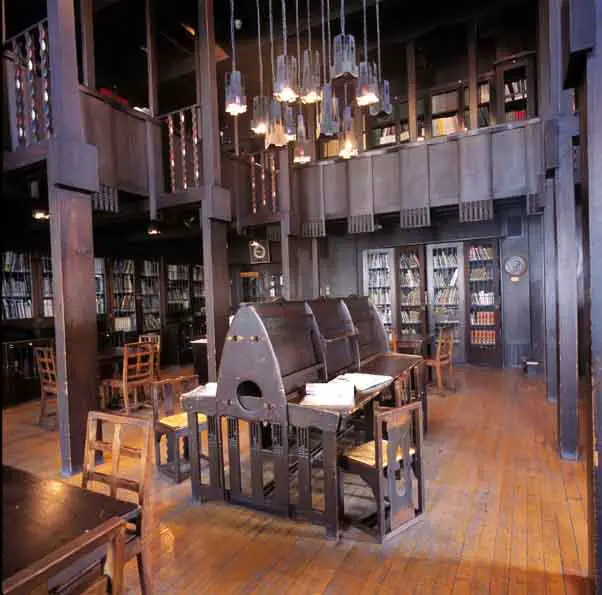
Decisions - Charles Rennie Mackintosh is it!


So, finally I have decided that he will be the focus of the summer assignment. Not because I like the torrent of 'Mockintosh' jewellery and other cheap tat, but to see if I can place his work as early Modernist and to identify his main influences. Terrible shame this will require an extended stay in Scotland.